Science
At The Hayes Primary School, science is a gateway to curiosity – a subject that invites our children to explore, question, experiment and understand the world around them. Through purposeful enquiry, hands-on investigation and real-life connections, our pupils develop the confidence and scientific thinking to ask “why?”, “how?” and “what if?”. We believe that every child should be empowered to ‘be the best they can be’, showing RESPECT for themselves, others and our environment, as they engage with the wonder of science and its role in the modern world.
Intent
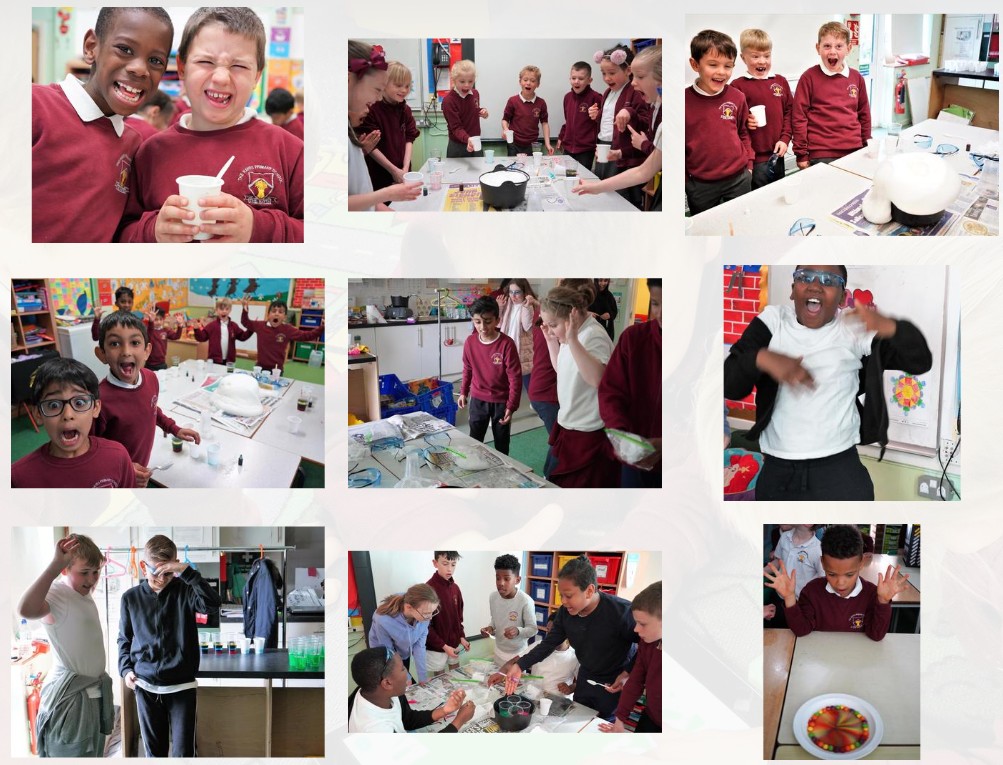
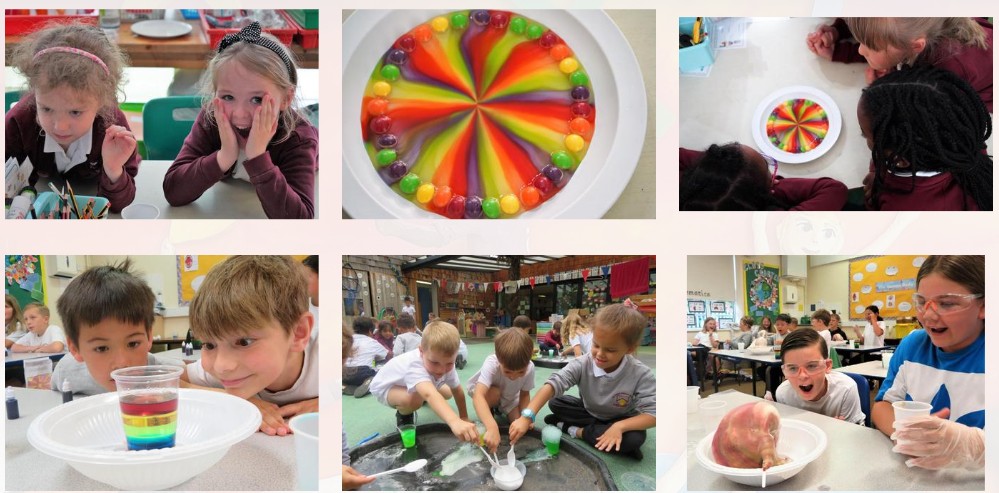
We believe that science should inspire a sense of awe and wonder in our pupils. Through hands-on investigations and explorations of the world around them, our pupils are encouraged to be curious, ask questions, and develop a deep understanding of scientific ideas. We are committed to providing a high-quality science education that equips our pupils with the knowledge and skills they need to make sense of the world and prepare them for their next steps in education and life. Children make discoveries for themselves, and they are encouraged to understand how science can be used to explain what is occurring, predict how things will behave and analyse causes.
Our vision for science at The Hayes is to:
- Foster a love of science and a curiosity about the natural and physical world
- Develop pupils’ scientific knowledge, understanding, and skills through practical, enquiry-based learning
- Enable pupils to make connections between scientific concepts and their everyday lives
- Encourage pupils to think critically, problem-solve, and work collaboratively
- Prepare pupils for the demands of the secondary science curriculum and beyond
In doing so we ensure that every child, regardless of background or ability, is given the best opportunity to discover, to ask and to achieve – living our value of RESPECT by valuing every individual’s contribution and by nurturing their scientific identity as a respectful, reflective and resilient learner.
Implementation
We use the highly-regarded scheme from Develop Experts to support the delivery of our science curriculum. This scheme, recommended by primary science specialists and the Primary Science Quality Mark (PSQM), gives our teaching staff a rich bank of resources: lesson plans, teaching slides, vocabulary frameworks, quizzes, assessments and up-to-date films. Every lesson is linked to a different scientific enquiry, scientific vocabulary is embedded, and lessons make explicit links to real-life scientists and contexts, aligning strongly with our school vision and values.
Throughout our science curriculum, pupils develop a secure understanding of key scientific concepts, including:
- The properties and behaviour of materials
- Living things and their habitats
- Forces and their effects
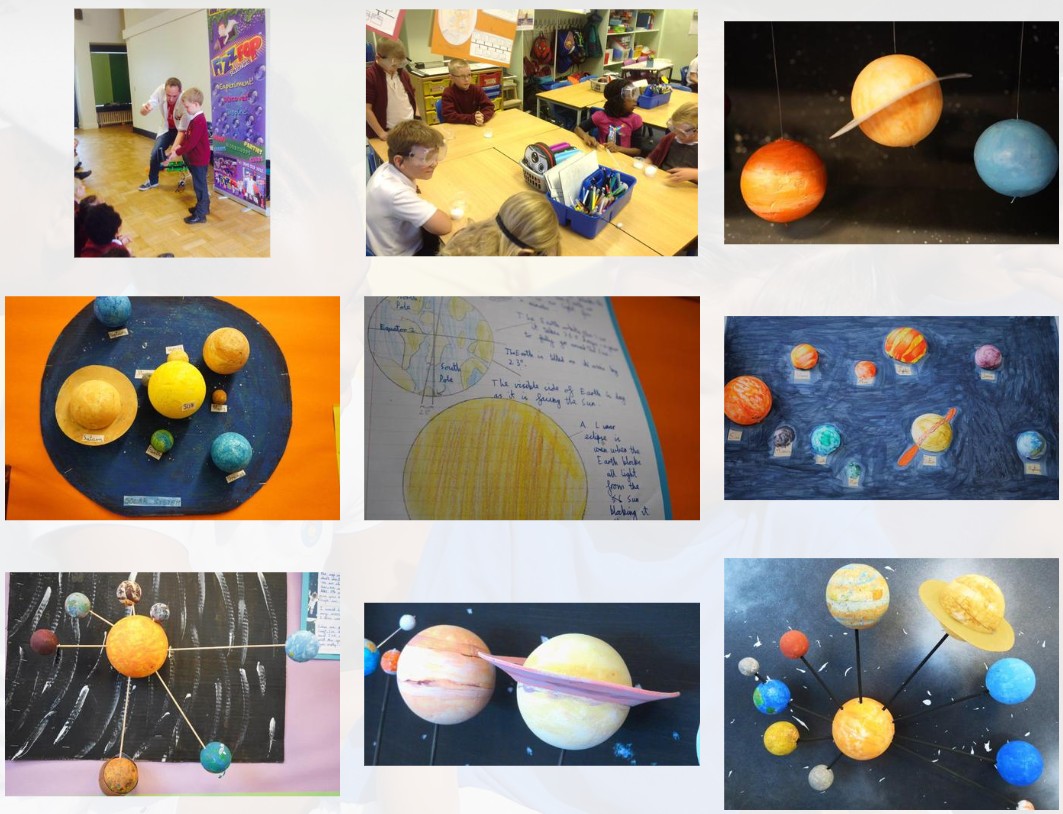
- Earth and space
- Electricity and light
Alongside this core knowledge, pupils will also learn to:
- Plan and carry out scientific investigations (including comparative/fair testing, pattern seeking, observations over time, research using secondary sources)
- Make observations and measurements with increasing accuracy
- Analyse data, draw conclusions and identify variables
- Use scientific vocabulary accurately and communicate their findings effectively
- Work collaboratively, ask meaningful questions and carry out improvements in investigations
- Communicate their findings effectively
We also embed science capital across the school by exposing children to science in everyday life and the wider world – for example, in Year 1 when studying Seasons we show a video about how a traffic warden working for Network Rail must monitor weather conditions, linking the science of seasons to real-life professions. Science is all around us and we enable children to see themselves as scientists.
Our curriculum is carefully planned and sequenced: prior learning is regularly revisited and built upon. Teaching takes place both within discrete science lessons and through cross-curricular links, enabling vertical and horizontal links across the school. Vocabulary is progressive and scaffolded, investigations increase in complexity as pupils move through Key Stage 1 into Key Stage 2. Teachers use assessment for learning during each lesson, and formal review points inform teachers and subject leadership about children’s progress, enabling timely support or challenge.
We ensure that barriers to learning are removed and that all pupils are supported to access the full breadth of the curriculum. We celebrate achievement and aim for every child to feel successful in their scientific journey.
Impact
Our science curriculum is carefully sequenced to ensure that pupils build on their prior knowledge and skills as they progress through the school. In Key Stage 1, pupils focus on developing their understanding of the world around them, exploring materials, living things and simple forces. As they move into Key Stage 2, the curriculum becomes more complex: pupils delve deeper into scientific concepts and apply their knowledge to more challenging contexts, making connections and thinking like scientists.
By the end of each key stage and ultimately at the end of Year 6, we aim for our children to:
- Have a secure understanding of the key concepts in science, as set out in the National Curriculum
- Be able to plan, carry out, analyse and evaluate scientific investigations with confidence
- Use a wide and appropriate scientific vocabulary to articulate their understanding
- See the relevance of science to their own lives, their community and the wider world
- Show curiosity, resilience, collaboration and respect – not only for their own learning but for the environment and for science as a discipline
- Be well prepared for the next stage of their education, including transition to secondary science
Wider Impact
By providing a high-quality science education, we aim to equip our pupils with the knowledge, skills and attitudes they need to be successful in their future studies and careers. We believe that a strong foundation in science will not only support their learning across the curriculum but also help them to become responsible, informed citizens who can contribute positively to their community and the wider world.
The Hayes Primary School has been awarded the Primary Science Quality Mark (PSQM), demonstrating our commitment to excellence in science teaching and learning.
The Hayes Primary School, has been awarded the Primary Science Quality Mark (PSQM), demonstrating our commitment to excellence in science teaching and learning. Professor Jane Turner, PSQM National Director said: “There was never a more important time for primary children to have a high-quality science education. The coronavirus pandemic and climate change crisis have made everyone aware of the importance of science in our world. Primary schools have an important role to ensure that children understand how science works and keeps us and our planet healthy and safe. Schools that have achieved a Primary Science Quality Mark have demonstrated a significant commitment to science teaching and learning. The profile and quality of science in each awarded school is very high. Children are engaging with great science both in and outside the classroom, developing positive attitudes towards science as well as secure scientific understanding and skills. Science subject leaders, their colleagues, head teachers, children, parents and governors should be very proud.”
We are very proud, and a huge thank you to Mrs Piamya, our Science Lead who has led with passion in this area and worked tirelessly to achieve this award. Well done!
How Science is taught throughout the school (Curriculum Mapping)
Science Documents
Science Progression of Skills and Knowledge
EYFS Science Progression of Skills and Knowledge
Quotes from the Primary Science Quality Mark
Example of a Lesson Plan (Y5: Earth and Space)
Example of a Knowledge Organiser (Y5: Earth and Space)
Example of Mastery in Year 5 - Earth and Space